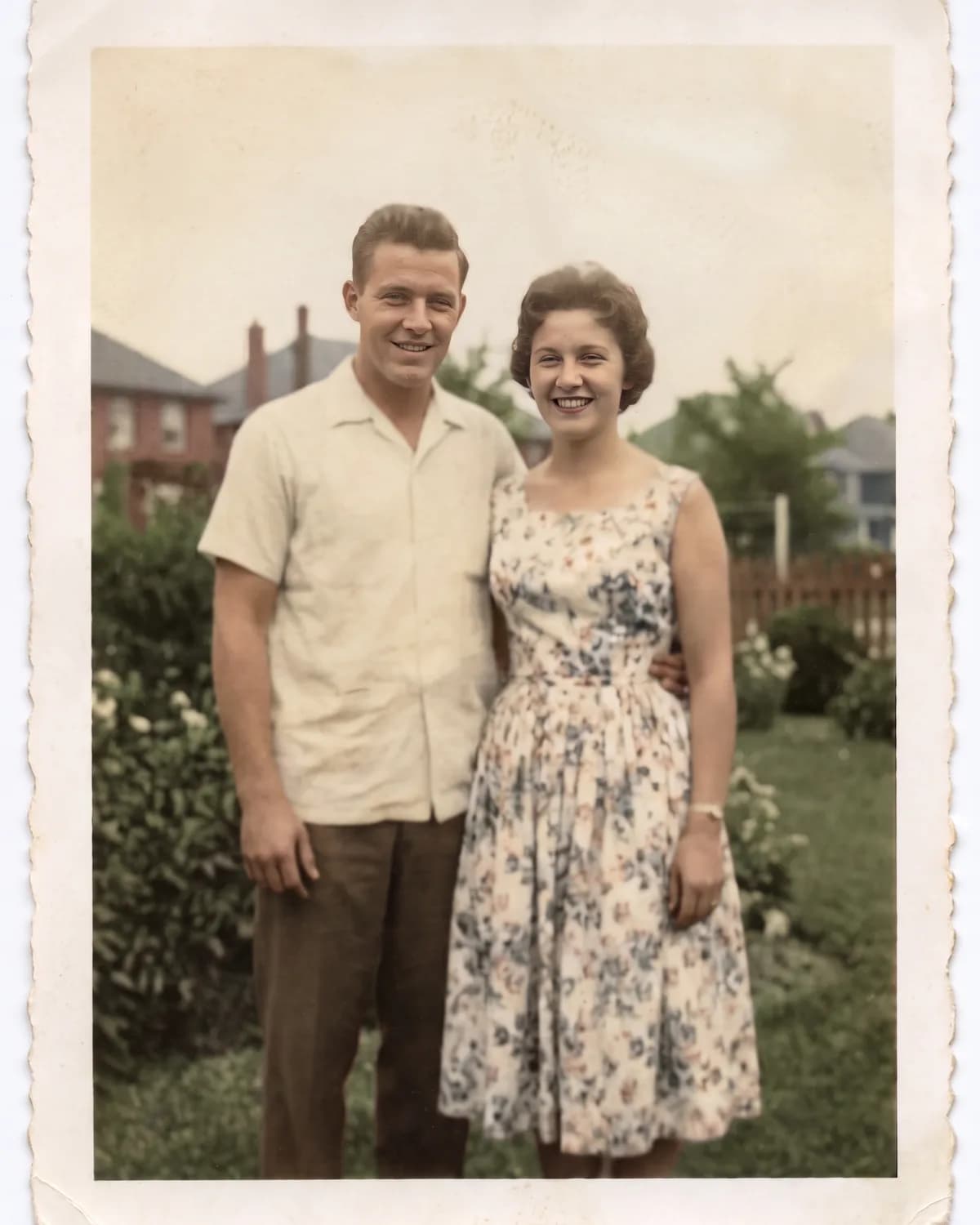
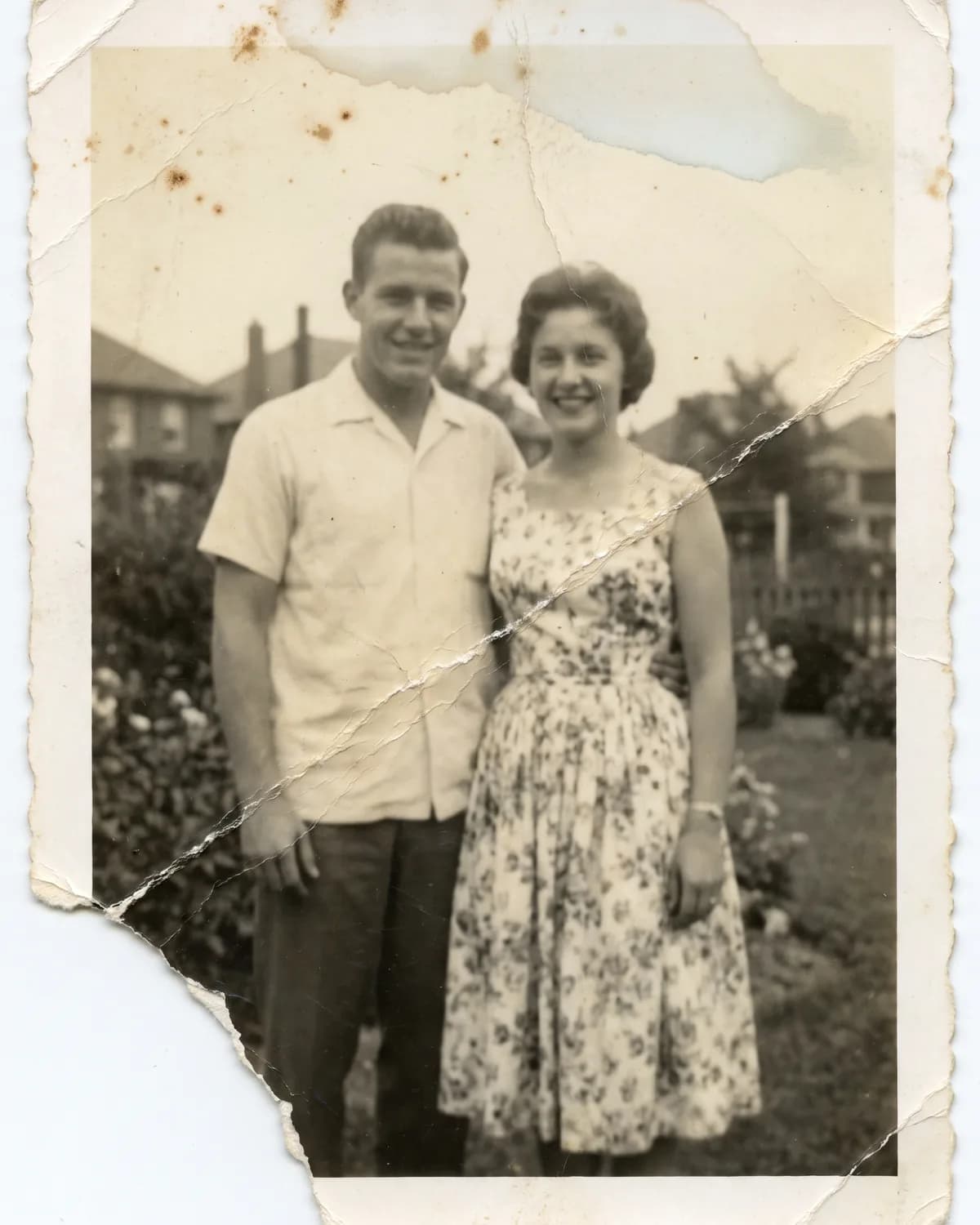
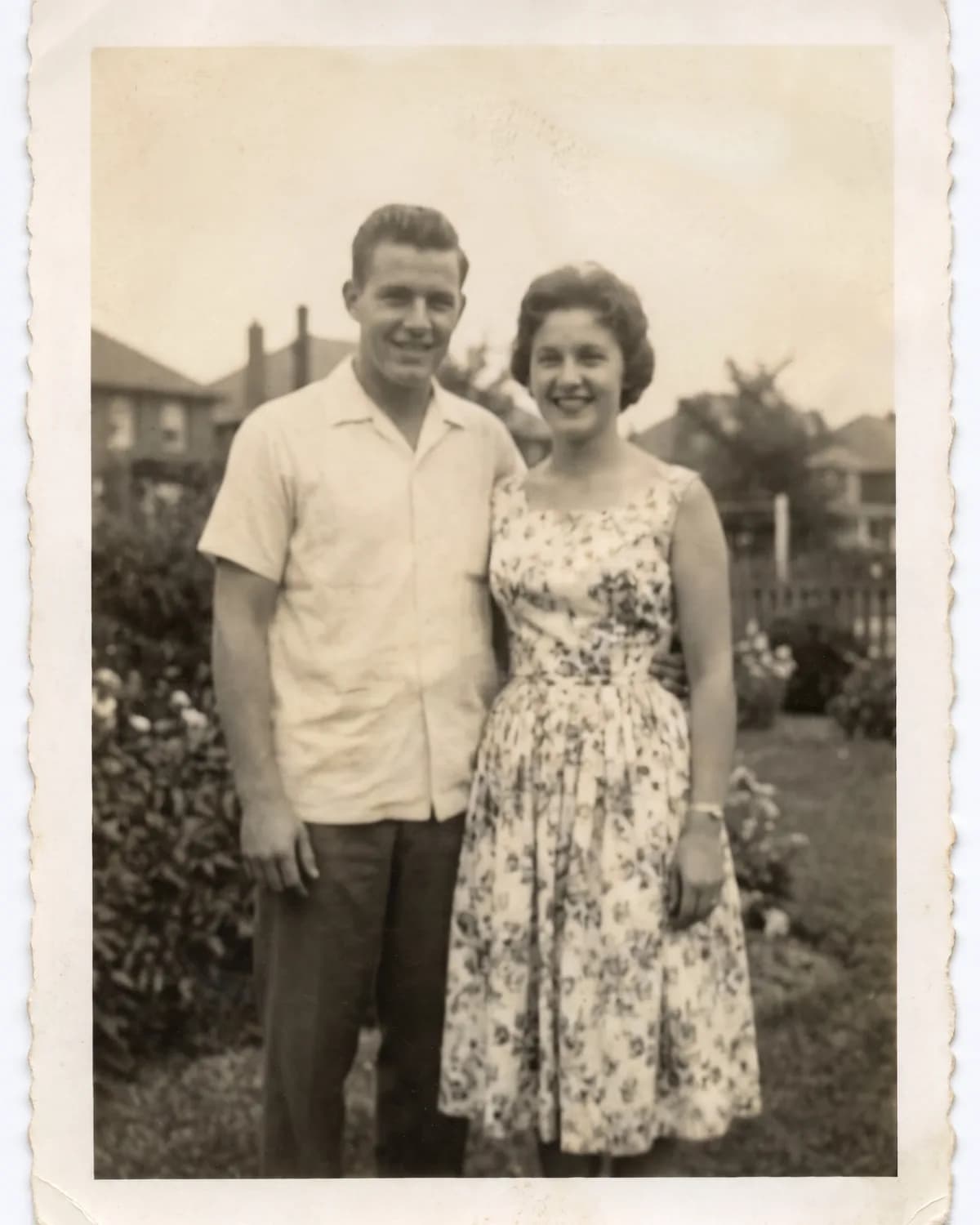
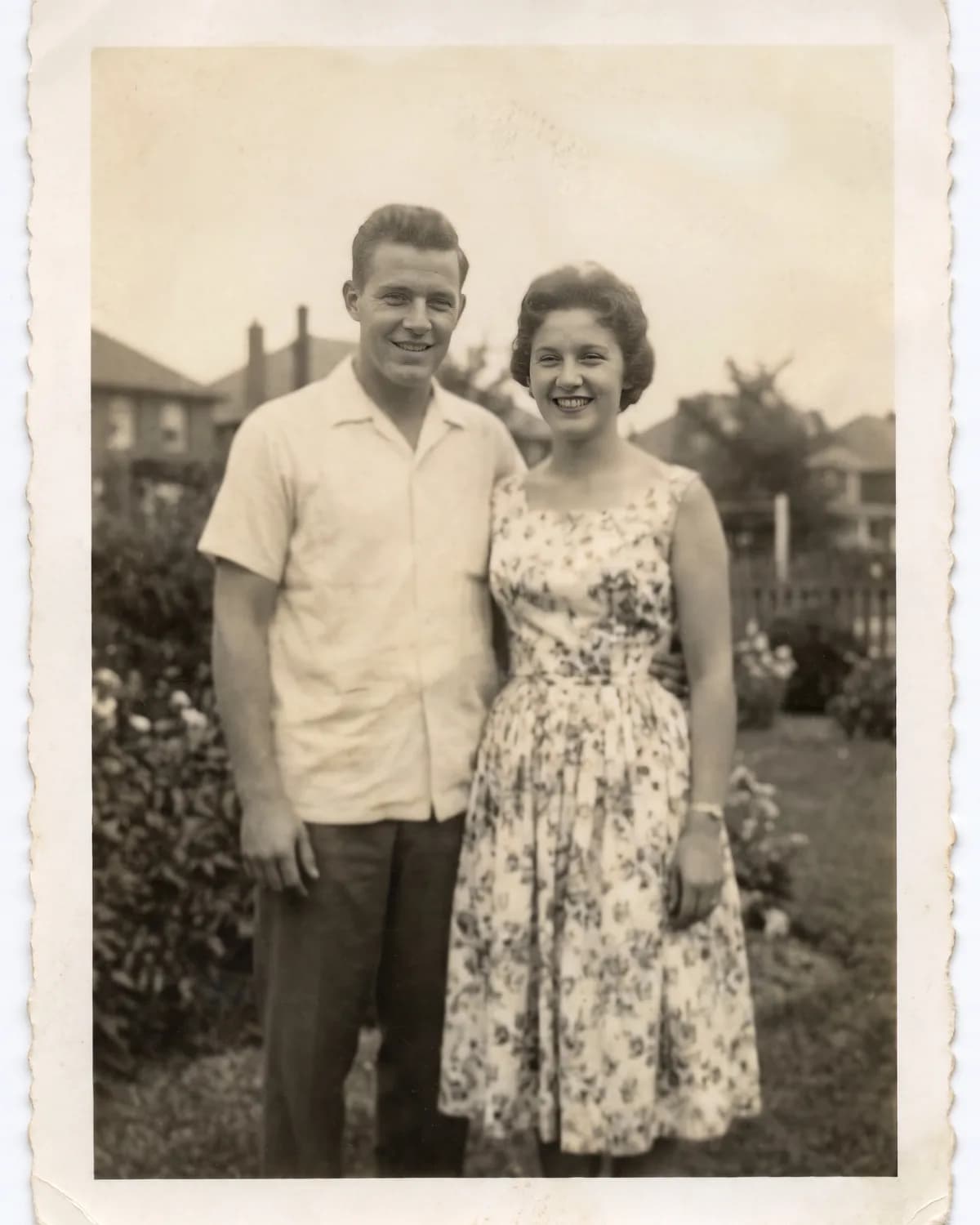
What kind of scan works best?
A flat, evenly lit scan or phone photo of the whole print, shot straight on. Include the full photograph rather than cropping in. Glare from a phone flash and a print photographed at an angle are the two things that hurt results most.
Will it still look like them?
That is the thing we optimise for, and it is the reason results are sometimes softer than they could be. Face restoration is held at high fidelity to the original pixels rather than turned loose, because a sharp photograph of somebody who is not your grandmother is a failed restoration, not a good one.
Can it fix a badly damaged photograph?
Repair rebuilds torn areas, creases, stains and emulsion loss from what surrounds them. Where a face or an object is entirely missing there is nothing to rebuild from, and what comes back is an invention — plausible, but not recovered. Treat those results as a reconstruction rather than a record.
Can I apply more than one treatment?
Yes. Tick as many as you want and they run as a chain, each one working on the output of the last. They always run in the same order — repair, sharpen, colourise, enlarge — because that is the order that works. Each step is billed separately.
How long does it take?
A single treatment finishes in well under a minute. A full chain of all four takes a few minutes, and the photograph is saved as soon as the last step lands.
Is there a subscription?
No. PhotoRevive uses credits you buy as needed, and you are only charged for steps that complete. Failed and cancelled steps cost nothing.
Do I keep the rights to my photographs?
Yes. Your photographs are yours and so are the restored versions. You are responsible for having the right to upload the scan — most family snapshots are fine, but a studio portrait may still be the photographer's copyright even if the print is yours.
What happens to my uploaded photograph?
It is stored so your restorations can be reviewed or run again, and it is sent to the model that performs each treatment. It is not used to train anything. Deleting a restoration removes the upload behind it.